-
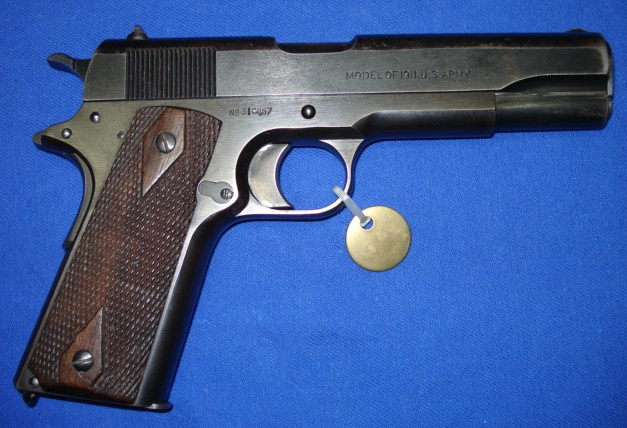
My Favorite World War I U.S. Small Arms – M1911 Pistol (Part 1/3)
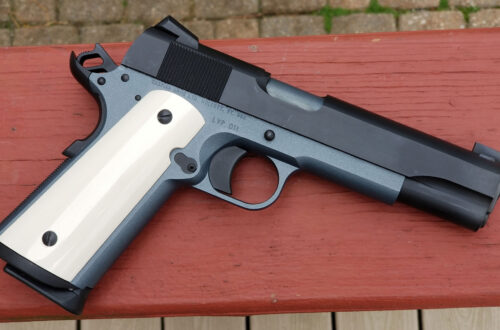
This post is the first of three about my favorite World War I U.S arms. My first collectible US martial arm purchase in the early 1980s was a Colt M1911 pistol manufactured in 1918. It had been carried by a friend’s grandfather during World War I. Sadly I had to sell that one to help pay for a divorce. I wish I had it back. The War to End all Wars (World War I) began in Europe in 1914. America remained neutral until April 6, 1917 when we declared war on Germany. It took many months for US troops to reach Europe and to enter combat. Because 1918 was the…
-
Smith & Wesson Model 10 Heavy Barrel
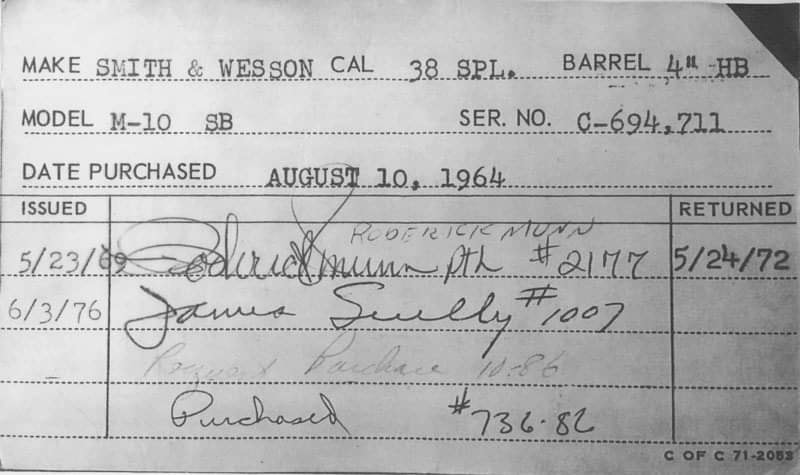
This week’s Thursday day at the Range included a double action revisit of a true classic: a Smith & Wesson Model 10 Heavy Barrel. Pretty ordinary, you’d say; pretty common, you’d say. Ah, but you might not think so if you noticed the cartouche that’s partially covered by the grip: CPD in a circle. “CPD” refers to “Cleveland Police Department, of Cleveland, Ohio. The third picture shows what I call the “library card,” the property record for this revolver. When the CPD began to rearm with semiautomatic pistols, Officer James Scully purchased the revolver in 1982. The revolver was fitted with Mershon grips during its service with the CPD. Mershon…
-
Double Action Revolver
This Thursday Day at the Range continues our double action revolver action, this time with a pre-WWII square-butt S&W Military and Police, fourth change. With a serial number in the 550,000 range. it likely dates to the late ’20s or early ’30s. This is one of those guns that has seen a lot of outside wear and abuse, but hasn’t been shot very much. The action is as smooth as silk, just as would be expected from a classic “Model 10.” The counterpoint to that sweet trigger is, of course, the vestigial sights. It should be no surprise that I’m a dyed-in-the-wool 1911 guy; but classic Smiths, particularly K frames,…
-
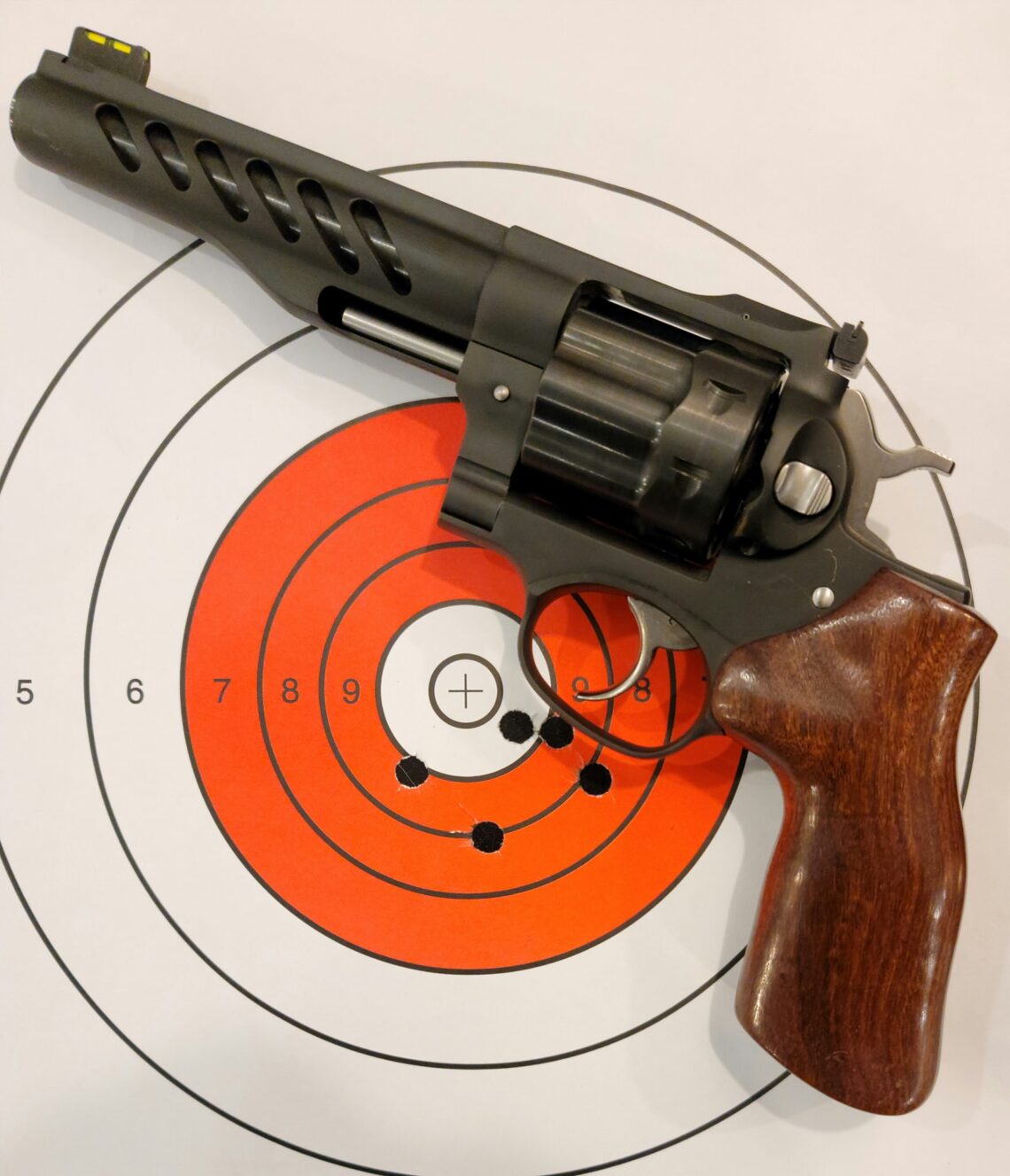
Ruger Super GP100
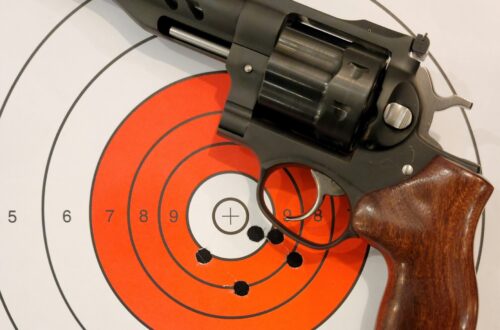
This time Thursday Day at the Range continues the double-action revolver series with more DA action. My focus for over six decades has been single action automatic pistols, specifically M1911s. Oh, sure, I dabbled in single-action revolvers such as the Ruger Single-Six, and at one point had an S&W Model 38 and a Walther P38. But, I didn’t shoot them much. This series of Thursday Days is intended to remedy my double-action deficiency. Last time we ran a Ruger Wiley Clapp GP100 with a 3″ barrel. This time, it’s another Ruger, a Super GP100. The Super GP is essentially a Super Redhawk with an eight-shot .357 Magnum cylinder and a…
-
Ruger GP100
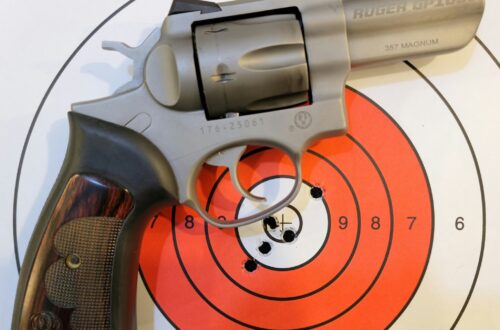
This Thursday Day at the Range included the first revolver we’ve run in some time. We’ve had a long string of autopistols, thus I think it’s time to switch things up with a little wheel-gun action. This week’s subject is a Wiley Clapp special edition 3″ Ruger GP100. The GP100 is Ruger’s heavy-duty medium frame .357 Magnum revolver. It replaced the much-loved Security-Six in much the way that S&W supplanted their K-Frames with the slightly stronger L-Frames. Wiley Clapp, a long-respected handgunner, has been retained as a consultant by Ruger (and Colt) to recommend product enhancements. In the case of the GP100, a fiber optic front sight and Novak-style rear…
-
Ruger BSR9
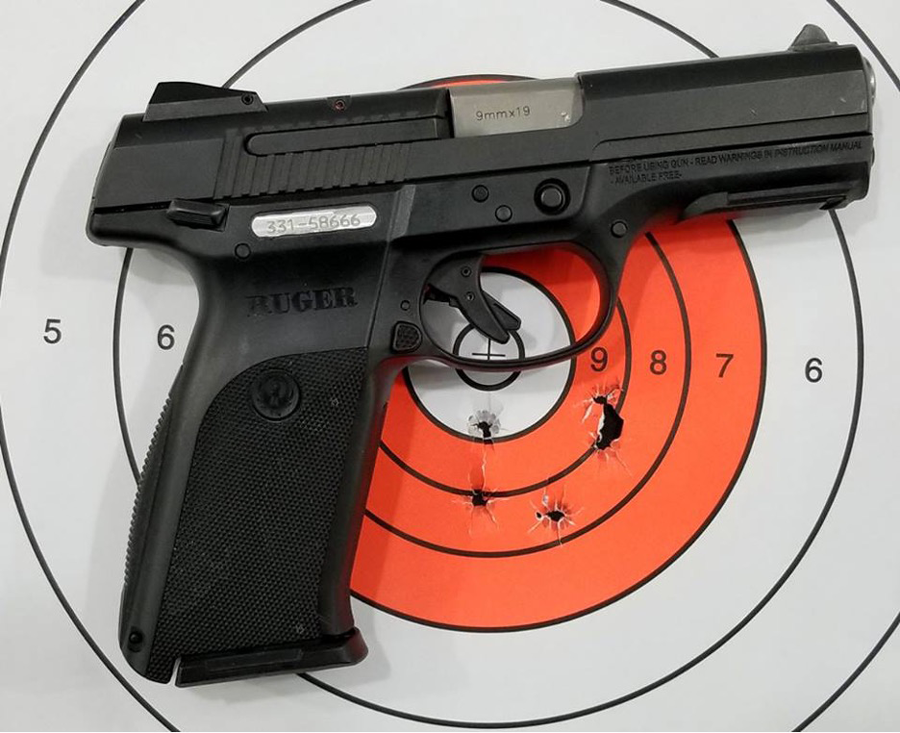
Today’s Thursday Day at the Range was, shall we say, both interesting and a bit humbling. After posting the “Five Best” 1911 targets below, this week’s targets weren’t nearly so impressive. That’s the humbling part. The interesting part is the contrast between this Ruger BSR9 (“B” for black slide) and the SR9 from a few weeks ago. The recent SR9 shoot was somewhat disconcerting because the front sight decided to attempt a walkabout. Needless to say, the accuracy results were somewhat compromised by a sight attempting to escape its dovetail. While contemplating a remedy for that pistol, which has a stainless bare finish slide, I decided to break out another SR9,…
-
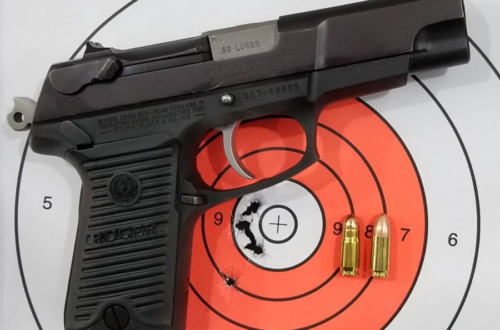
.30 Luger Ruger P89
This week’s Thursday Day at the Range includes a reshoot of the .30 Luger Ruger P89. If you recall from the earlier Thursday Day at the Range report, Ruger offered a .30 Luger conversion kit for the 9x19mm P89 pistol. I was reminded at that time the Ruger actually offered a two-caliber version of the P89, the “P89X.” The .30 Luger barrel and recoil spring assembly had their own little recesses in the plastic pistol case. This particular setup was a separate kit, apparently offered by Ruger to use up extra .30 Luger ensembles. Our previous experience with the ersatz P89X involved adapting a P89DC (decocking) slide to a P89.…
-
Ruger P91DAO
Today’s Thursday Day at the Range is brought to you courtesy of two Thursday Days at the Range ago, a shoot saved for a day when I could not make it to the range. You see, today instead of the customary range session I got the first fitting for my new hearing aids. Ironic, no? Well, you might ask, what about the gun? Those who are regular readers of these Thursday Day at the Range reports will recall the Ruger P89 and P89X sessions. During the discussion of these Rugers the comment was made, “I have a P91DAO; have you ever had one?” The P91 is, for practical purposes,…
-
.45 ACP CDR SR1911
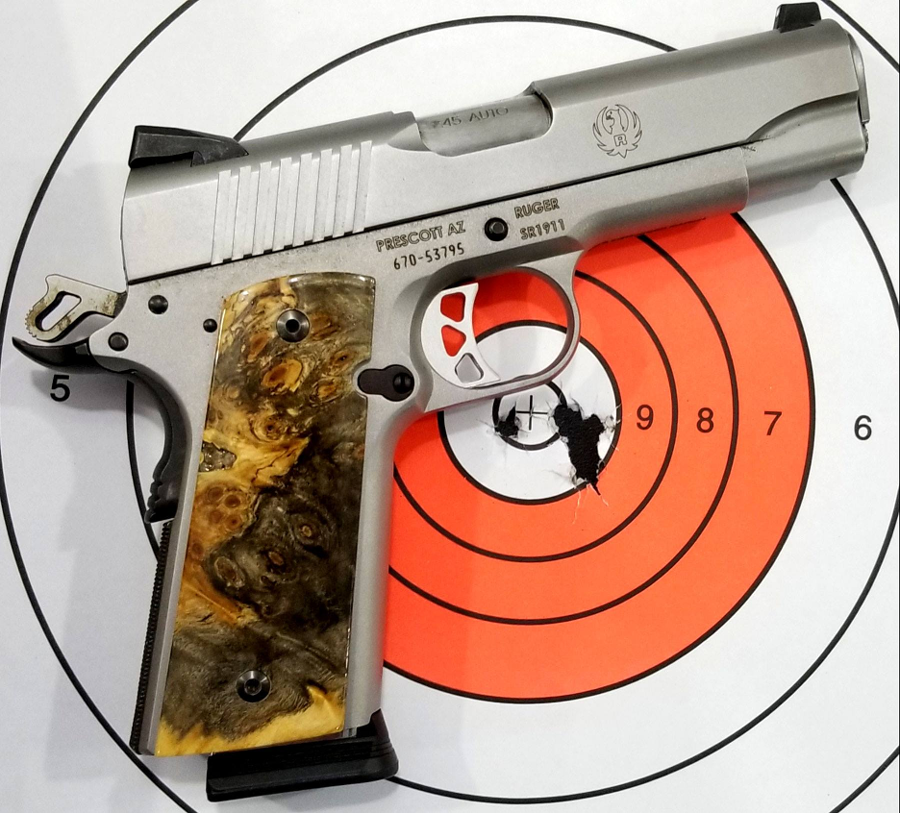
This week’s Thursday Day at the Range is a back-to-the-.45-SR1911 Day. Ruger’s SR1911 Series is a refreshingly direct rendition of the classic M1911. You’ll find no extraneous ornamentation – at least if you look past the Doug Koening Custom Shop Special, that is. This time we’re reshooting the steel .45 ACP CDR SR1911. Why? Well, we had good luck improving the accuracy of another M1911 pistol by upgrading the stocks. So, when we added this set of beautiful stocks from Bill Griffith to my steel .45 Ruger CDR, we wondered if history would repeat itself. Well, doggone it, it sure did! If you were to scroll down to the earlier report on…
-
We Wish They Could Talk – And Sometimes They Do (Part 2/2)
We Wish They Could Talk – And Sometimes They Do – Part 2 By Scott Duff Records of some serial numbered older US weapons from the Civil War through the early 20th century are more prevalent in the National Archives than are World War II arms. If you have the time and money and live near the Archives it can be a gold mine for ID’d small arms. Many years ago Frank Mallory began a business named Springfield Research Services (SRS) that conducted exactly that type of research. Frank compiled his research at the National Archives into a series of books listing small arms by model, serial number and document…