Blog
-
My AR-15 Journey: The 1994 Assault Weapon Ban & the Global War on Terror (Part 1/3)
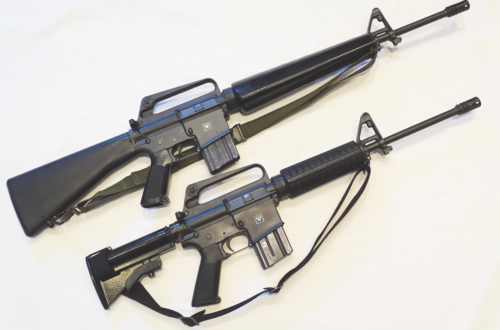
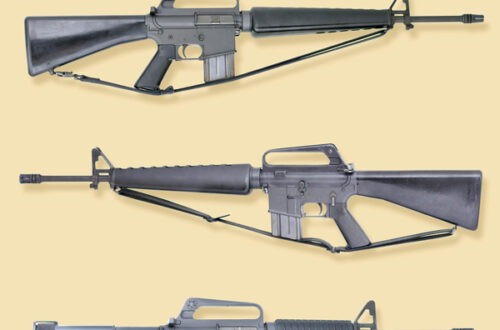
If you have been following my Blog posts, from my review of authors Perry Cox and Bruce Kaufman’s wonderful new book, A Collectors Guide to the Colt AR-15 SP1 Sporter Rifle, you know that I am a longtime fan of the Colt AR-15 SP1 Sporter Rifle. When I bought my Colt SP1 in 1982 there were two choices in the purchase of the AR-15, a Colt SP1 Sporter rifle or a Colt SP1 Sporter carbine. That was it as there were no other makers. I chose the rifle. The price was $500. I shot my SP1 a lot back in the day and used that rifle to compete in early…
-
The Springfield Armory Model 1866 Rifle – Second Allin Conversion and the Wagon Box Fight (Part 2/2)
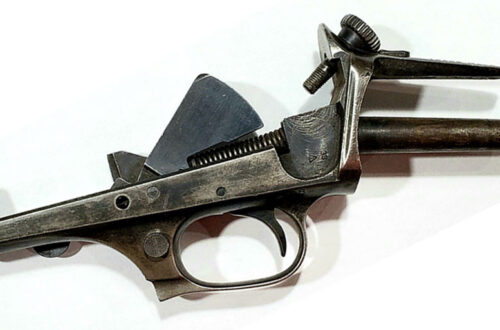
Following the Civil War, Army Ordnance sought a cost effective way of altering the large inventory of serviceable .58 caliber muzzle-loading rifle-muskets into breech-loading rifles chambered for a self-primed metallic cartridge. Springfield Armory Master Armorer, Erskine S. Allin was assigned that task. He developed a design to cut open the breech of old rifle-musket barrels and attach a “trapdoor” hinged breech mechanism for loading, firing and ejecting the cartridge. His first successful attempt was adopted as the “U.S. Rifle, Model 1865 Rifle-Musket” which utilized a .58 caliber rim fire metallic cartridge. This rifle was also known as the First Allin Conversion. Over 5,000 were produced by Springfield Armory. Field reports…
-
My First AR-15
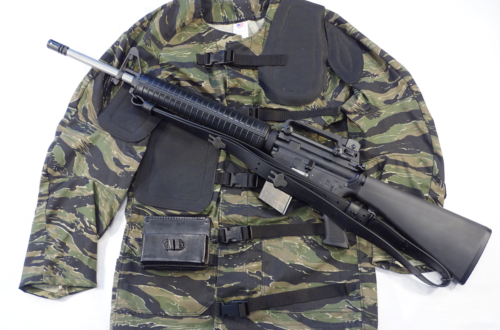
“Write the book you’d want to read!” That was the impetus for the original AR-15 Complete Owner’s Guide. To be honest, right through the ‘90’s I was disinterested in the AR-15 rifle. I very much preferred the Ruger Mini-14. During much of that time, the AR-15 market consisted of either pricey Colts or affordable small, dare I say, “no-name,” manufacturers. At least, that’s how I saw it. Then, after a time, the “ABC” brands became the “name” manufacturers: Armalite, Bushmaster, and Colt. The Armalite of that day was not the Armalite that had developed the AR-15. The Armalite company had ceased to exist many years prior. The owner of Eagle…
-
Seeing Double: Duplicate Serial Number – Springfield Armory and Winchester M1 Rifles
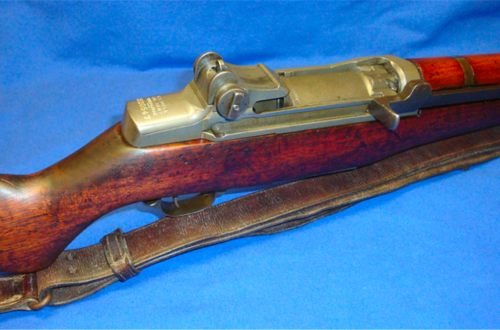
Most long time M1 rifle collectors know that duplicate World War II serial number Springfield and Winchester rifles exist. This was revealed in the July 1960 issue of American Rifleman magazine by a brief article that included a photograph of an SA and WRA rifle both with serial number 2445470. In 1987 I conducted a survey of serial numbers contributed by the Garand Collectors Association (GCA) membership, it revealed that several blocks of assigned serial numbers that were duplicated. This information was presented in my book “The M1 Garand: World War II” in Chapter 4, Production, Deliveries, and Serial Numbers. Newer collectors may not have been aware of this duplication,…
-
The Wagon Box Fight and The Springfield Armory M1866 – Second Allin Conversion (Part 1/2)
One of my favorite periods of study of American history and the military arms is the time between the end of the Civil War in 1865 and the Custer battle of 1876. I have been fortunate to have walked the battlefields of Northwest Wyoming in the area of the Powder River, Fort Phil Kearney and the Little Big Horn battlefield in Montana. A fascinating aspect of this period is that it was a time of great and rapid change in the transition from muzzle loading arms to repeating arms and from percussion to centerfire metallic cartridges. A great deal of activity centered around Fort Phil Kearny, which was established in…
-
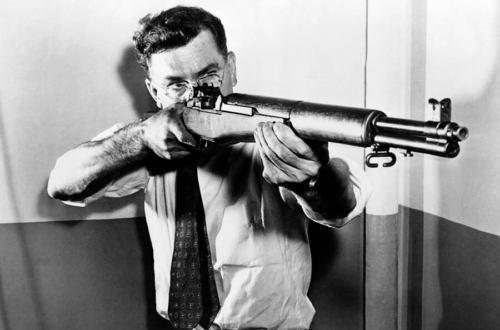
The “Gas Trap” Garand
Newer M1 Garand rifle collectors may not be aware that the U.S. Rifle, Cal. .30 M1 with which we are all familiar featured a very different type of gas system when it was adopted in 1936. The collector term standardized by the Garand Collectors Association (GCA) in 1993 for the first type of gas system was Gas Trap that utilized a false muzzle to deflect or “trap” the gas into the gas cylinder. The early barrel was threaded at the muzzle and the gas cylinder screwed onto it. The gas plug slipped down into the front of the cylinder and was held in place by a screw. The barrel had…
-
BOOK REVIEW: A Collectors Guide to the Colt AR-15 SP1 Sporter Rifle
I have long been a fan of the Colt AR-15 SP1 Sporter Rifle. When I bought my Colt SP1 in 1982 you had two choices in the purchase of the AR-15, a Colt SP1 Sporter rifle or a Colt SP1 Sporter Carbine. That was it as there were no other makers. I chose the rifle. The price was $500. I shot my SP1 a lot back in the day and used that rifle to compete in early IPSC 3-gun matches. It remains one of my favorite rifles; it is accurate, light weight, and easy to shoot. One of my gun regrets is that I didn’t buy a Colt SP1 Sporter…
-
My Favorite World War I U.S. Small Arms – 1917 Rifle (Part 3/3)
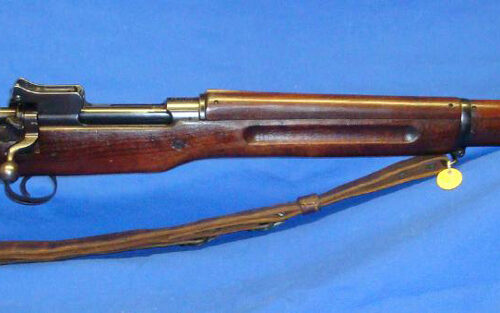
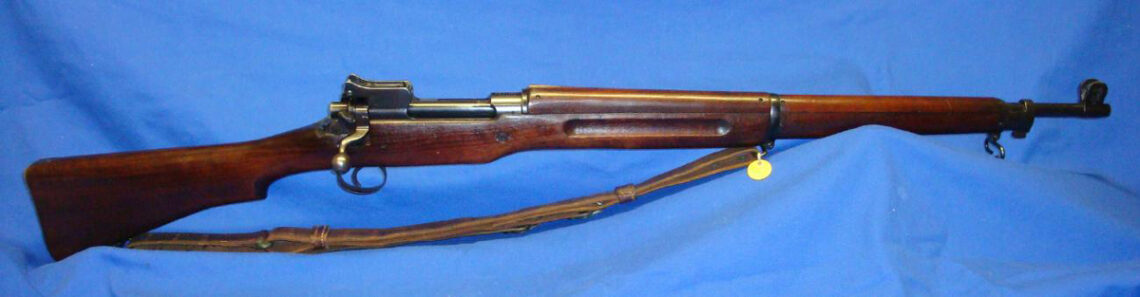
This blog post is the last of three about my favorite World War I U.S small arms. When America entered World War I in April 1917 it was ill prepared in arms and equipment with which to fight in a world war. As it took many months for US troops to train and travel to Europe and to enter combat, weapons manufactured in 1918 have been the focus of my collecting. Surprising to some, the M1903 rifle was not the predominant rifle carried by U.S. troops in World War I. That rifle actually was the United States Rifle Model of 1917, often erroneously referred to as the M1917 Enfield or…
-
My Favorite World War I U.S. Small Arms – 1903 Rifle (Part 2/3)
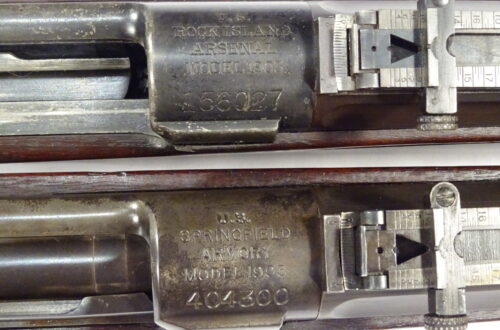
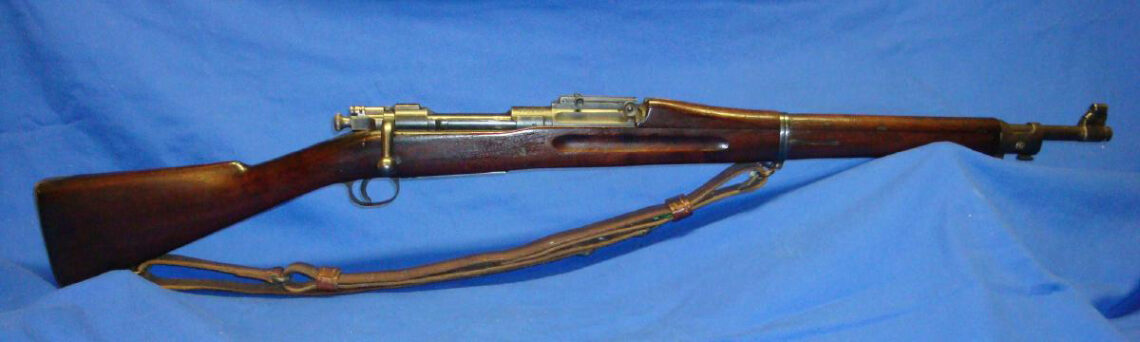
This blog post is the second of three about my favorite World War I U.S small arms. America declared war on Germany on April 6, 1917. It took many months for US troops to reach Europe and to enter combat. The primary period of time for Americans in combat in World War I was in 1918, therefore weapons manufactured in 1918 have been the focus of my collecting. From adoption in 1903 through early 1917, Springfield Armory was the only continuous maker of the M1903. Rock Island Arsenal had also manufactured M1903 rifles, but only from 1904 through 1913. Production at Springfield Army was at only a moderate rate. By…
-
My Favorite World War I U.S. Small Arms – M1911 Pistol (Part 1/3)
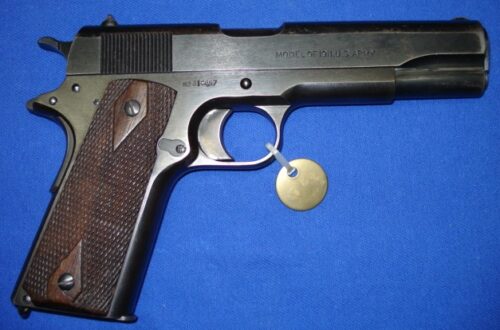
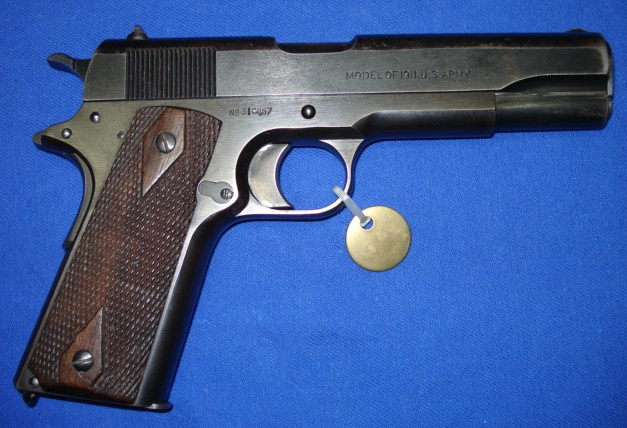
This post is the first of three about my favorite World War I U.S arms. My first collectible US martial arm purchase in the early 1980s was a Colt M1911 pistol manufactured in 1918. It had been carried by a friend’s grandfather during World War I. Sadly I had to sell that one to help pay for a divorce. I wish I had it back. The War to End all Wars (World War I) began in Europe in 1914. America remained neutral until April 6, 1917 when we declared war on Germany. It took many months for US troops to reach Europe and to enter combat. Because 1918 was the…