Why the Ruger 10/22 Refuses to Fade Away
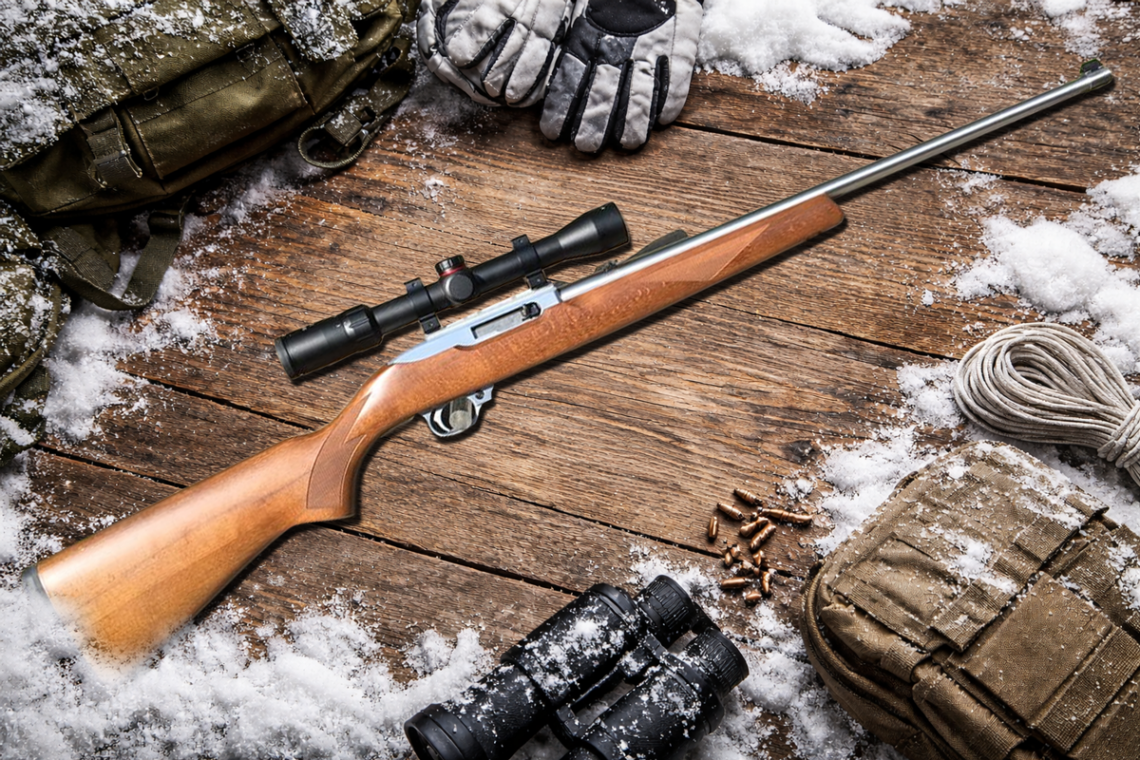
Few firearms in American history have achieved what the Ruger 10/22 has: near-universal recognition, decades-long relevance, and genuine usefulness across generations. Since its introduction in 1964, the 10/22 has become the default .22 rifle for millions of shooters—not because of hype, but because it simply works.
At its core, the 10/22 succeeds by being approachable without being disposable. It’s lightweight, reliable, and unintimidating for new shooters, yet accurate and robust enough to remain interesting for experienced ones. For many Americans, the 10/22 is their first rifle. For many more, it’s the one they never sell.
The design itself is a masterclass in practicality. The rotary magazine feeds smoothly and sits flush with the stock. The controls are straightforward. Maintenance is simple. Ammunition is inexpensive and widely available. Taken together, these qualities make the rifle easy to shoot often—and that’s where real value lives.
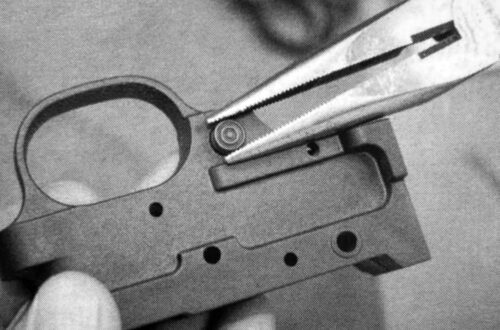
But the 10/22 didn’t become iconic on factory specs alone. What truly sets it apart is its adaptability. Few firearms have inspired such a massive aftermarket. Barrels, stocks, triggers, bolts, optics mounts—virtually every component can be upgraded, tuned, or replaced. Owners can turn a basic plinker into a precision trainer, a competition rimfire, a suppressed small-game rifle, or a faithful clone of their original childhood gun. The 10/22 grows with its owner.
 That adaptability is why knowledge matters, and why one book in particular continues to outsell all others in the Scott Duff catalog: The Ruger 10/22 Complete Owner’s & Assembly Guide by Walt Kuleck. It is the single most popular Scott Duff title because it speaks directly to what 10/22 owners value—understanding their rifle, maintaining it correctly, and modifying it with confidence. Whether purchased in paperback or coil-bound format, the guide has become a bench-side essential for builders, tinkerers, and serious owners alike.
The Ruger 10/22 endures because it earns its place. It’s useful, economical, endlessly configurable, and supported by a deep body of shared knowledge. In a market full of trends and short-lived designs, the 10/22 remains what it has always been: a rifle people trust, learn on, and keep for life.